Introduction
Continuing education is essential in today’s rapidly changing world. learning does not end after earning a degree or diploma. Industries are evolving, technology is advancing, and employers expect professionals to update their knowledge regularly. This is where continuing education plays a vital role. It enables individuals to develop new skills, stay competitive in the job market, and achieve long-term career success.
Whether you are a student, teacher, healthcare professional, engineer, or business owner, continuing education helps you remain relevant and prepared for future opportunities.
What Is Continuing Education?
Continuing education (CE) refers to any learning activity that takes place after formal education. It includes courses, certifications, workshops, seminars, online training, and professional development programs designed to improve knowledge and practical skills.
Unlike traditional degree programs, continuing education focuses on lifelong learning and skill enhancement. Many organizations also require employees to complete continuing education credits to maintain professional licenses or certifications.
Why Is Continuing Education Important?
Keeps Your Skills Updated
Technology and industry standards change frequently. Continuing education ensures you stay informed about the latest trends, tools, and best practices.
Benefits
- Learn modern technologies
- Improve technical skills
- Stay relevant in your profession
- Adapt to workplace changes
Improves Career Opportunities
Employers prefer candidates who continuously improve their skills. Additional certifications and training demonstrate commitment, motivation, and professional growth.
Career Advantages
- Better job opportunities
- Higher promotion chances
- Increased earning potential
- Stronger professional profile
Boosts Confidence
Learning something new increases confidence and improves problem-solving abilities. Professionals who continuously develop their knowledge often perform better at work.
Supports Lifelong Learning
Education should not stop after graduation. Lifelong learning helps people adapt to new environments, understand emerging technologies, and remain intellectually active.
Types of Continuing Education
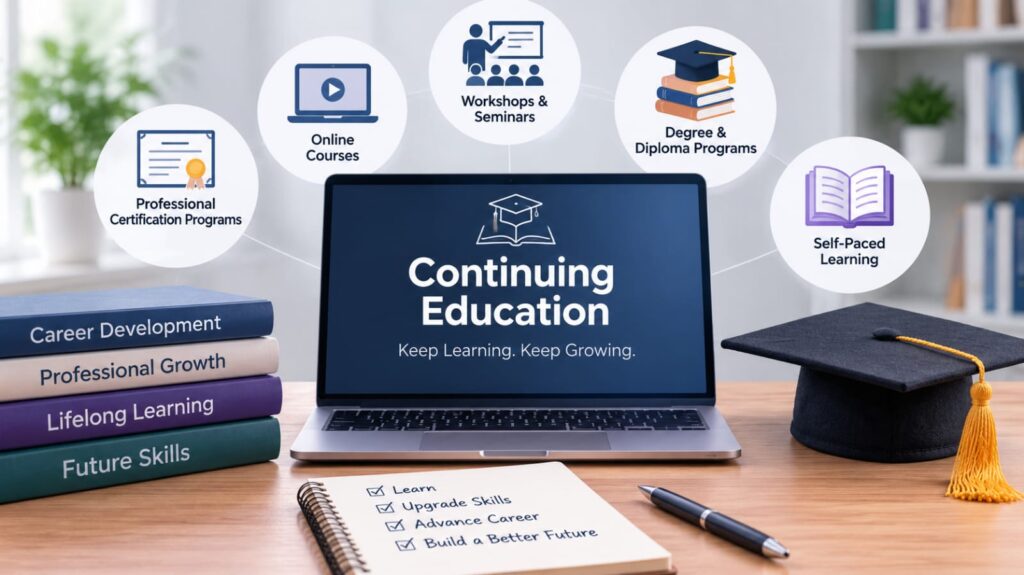
Professional Certification Programs
Professional certifications validate specialized knowledge and improve career prospects in industries like IT, healthcare, finance, and project management.
Examples include:
- Digital Marketing Certifications
- Project Management Certifications
- Cybersecurity Certifications
- Cloud Computing Certifications
Online Courses
Online learning platforms make education accessible from anywhere.
Popular topics include:
- Programming
- Artificial Intelligence
- Graphic Design
- Data Science
- Business Management
- Language Learning
Workshops and Seminars
Workshops provide practical experience through hands-on activities, while seminars focus on sharing expert knowledge and industry insights.
Corporate Training
Many companies organize internal training programs to enhance employee performance, leadership skills, communication, and technical expertise.
University Extension Programs
Many universities offer short courses, diploma programs, and executive education for working professionals seeking additional qualifications.
Benefits for Professionals
Better Job Security
Employees with updated skills are often more valuable to organizations and better prepared for industry changes.
Higher Salary Potential
Additional certifications and specialized knowledge often lead to salary increases and better career advancement.
Expanded Professional Network
Training sessions, conferences, and seminars allow professionals to connect with industry experts, mentors, and peers.
Improved Productivity
Learning new methods and technologies helps employees complete tasks more efficiently and effectively.
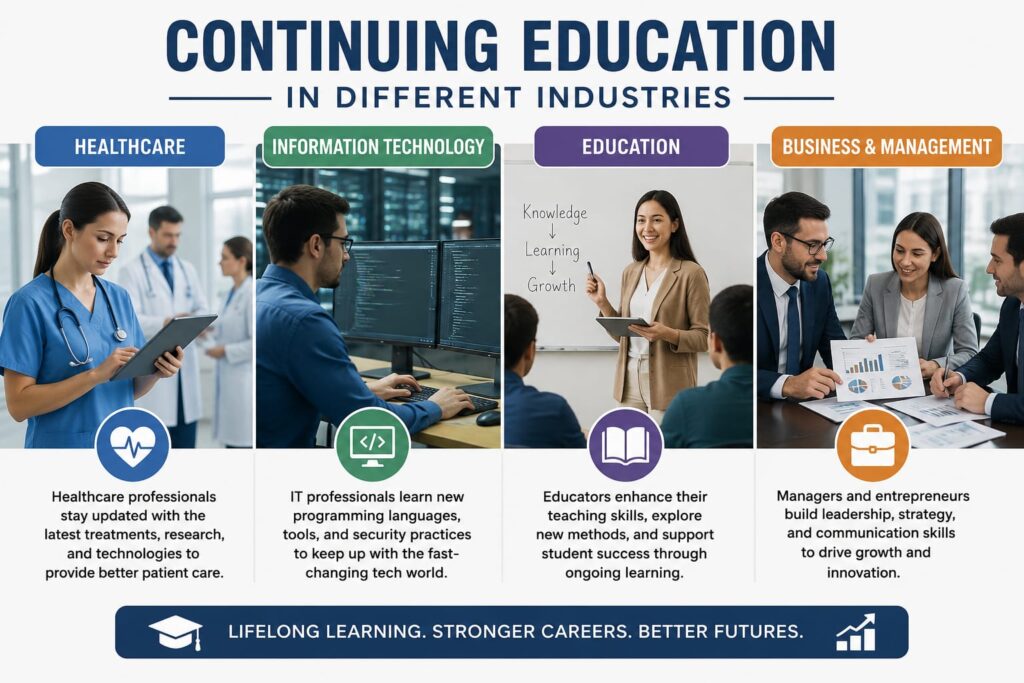
Continuing Education in Different Industries
Healthcare
Doctors, nurses, pharmacists, and medical professionals participate in ongoing professional training to stay updated with medical research, treatment methods, and healthcare regulations.
Information Technology
IT professionals regularly learn about cloud computing, cybersecurity, artificial intelligence, machine learning, and software development.
Education
Teachers participate in professional development programs to improve teaching strategies and classroom management techniques.
Business
Managers and entrepreneurs use continuing education to strengthen leadership, finance, marketing, and strategic planning skills.
Challenges of Lifelong Learning
Although continuing education offers many benefits, learners may face certain challenges.
- Limited time due to work commitments
- Course fees and training expenses
- Balancing work, family, and education
- Maintaining motivation throughout the learning process
Fortunately, flexible online learning options have made continuing education more accessible than ever before.
Tips for Successful Lifelong Learning
To maximize the benefits of continuing education, follow these practical tips:
- Set clear learning goals.
- Choose courses relevant to your career.
- Create a consistent study schedule.
- Practice newly acquired skills regularly.
- Earn recognized certifications.
- Continue learning even after completing a course.
The Future of Lifelong Learning
The future of lifelong learning is becoming increasingly digital. Artificial intelligence, virtual classrooms, microlearning, and personalized learning platforms are transforming how people acquire knowledge.
Employers are also placing greater emphasis on practical skills rather than traditional degrees alone. As industries continue to evolve, lifelong learning will become an essential requirement for career success.
Frequently Asked Questions (FAQs)
What is the purpose of continuing education?
The purpose of continuing education is to help individuals update their knowledge, improve professional skills, and remain competitive in their careers.
Who Can Benefit From Further Education?
Anyone who wants to improve their skills, change careers, maintain professional certifications, or stay updated with industry developments can benefit from continuing education programs.
Is Further Education Only For Profeesionals?
No. Students, job seekers, entrepreneurs, retirees, and anyone interested in lifelong learning can participate in continuing education programs.
Can online courses count as Further Education?
Yes. Many accredited online courses and certification programs qualify as continuing education and are recognized by employers and professional organizations.
Conclusion
Continuing education has become an essential part of modern life. As industries evolve and technology advances, professionals must continuously update their knowledge and skills to remain competitive. Whether through online courses, professional certifications, workshops, or university programs, continuing education supports career advancement, personal growth, and lifelong learning.
Investing in lifelong learning today can open the door to better opportunities, increased confidence, higher earnings, and long-term professional success. In a world where change is constant, the willingness to keep learning is one of the most valuable skills anyone can develop