Introduction
In today’s fast-changing world, learning should not stop after school, college, or university. New technologies, changing industries, and evolving job requirements make continuous learning more important than ever. A lifelong learning programme helps people develop new skills, improve existing knowledge, and stay prepared for personal and professional growth.
Whether you are a student, working professional, entrepreneur, or retiree, lifelong learning encourages continuous improvement and opens new opportunities throughout life. It supports career advancement, builds confidence, and helps individuals adapt to changing environments.
What Is a Lifelong Learning Programme?
A lifelong learning programme is a structured learning process that encourages individuals to continue gaining knowledge and skills throughout their lives. These programmes can include online courses, workshops, professional certifications, university extension programmes, seminars, vocational training, and self-directed learning.
Unlike traditional education, which usually ends after earning a degree, lifelong learning focuses on continuous personal and professional development.
Why Is a Lifelong Learning Programme Important?
Helps You Stay Competitive
Technology and workplace requirements continue to evolve. A lifelong learning programme helps individuals keep their knowledge up to date and remain competitive in today’s job market.
Benefits:
- Learn new technologies
- Improve practical skills
- Stay updated with industry trends
- Adapt to workplace changes
Supports Career Growth
Employers value people who are willing to learn continuously. Completing new courses and certifications can improve your qualifications and increase your chances of promotion.
Career Advantages:
- Better job opportunities
- Higher earning potential
- Stronger professional profile
- Increased promotion opportunities
Builds Confidence
Learning new skills improves confidence and encourages people to solve problems more effectively. It also helps individuals become more independent and adaptable in different situations.
Encourages Personal Development
Lifelong learning is not only about careers. It also helps people develop communication skills, critical thinking, creativity, and better decision-making abilities. Learning throughout life contributes to both personal satisfaction and professional success.
Types of Lifelong Learning Programmes
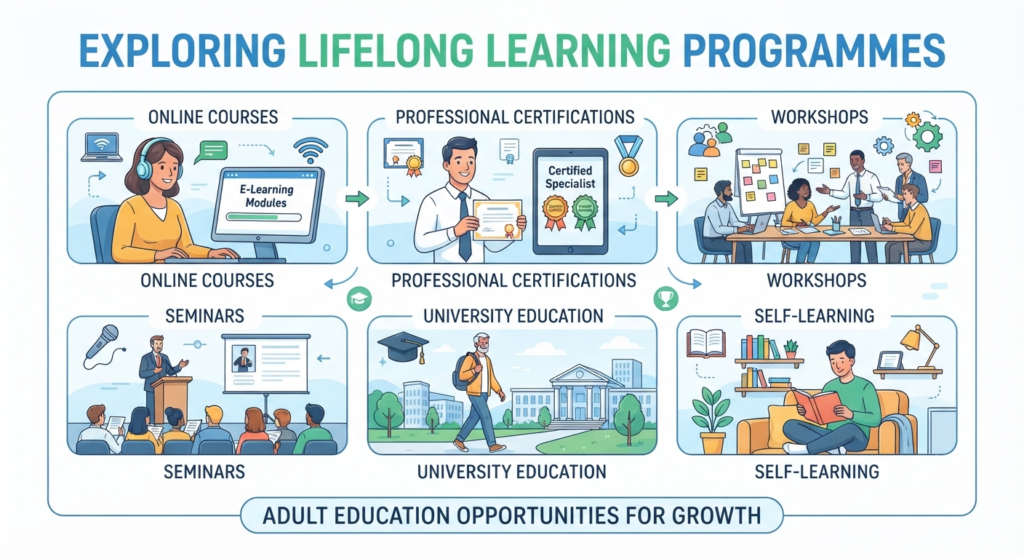
Online Learning Programmes
Online learning allows people to study from anywhere at their own pace. It is one of the most popular forms of lifelong learning because it offers flexibility and access to thousands of courses.
Popular subjects include :
- Digital Marketing Artificial Intelligence
- Data Science
- Graphic Design
- Business Management
- Language Learning
Professional Certification Programmes
Professional certifications help individuals gain specialized knowledge and demonstrate expertise in a particular field.
Examples include:
- Project Management Certifications
- Cybersecurity Certifications
- Cloud Computing Certifications
- Digital Marketing Certifications
Workshops and Seminars
Workshops provide hands-on practical experience, while seminars focus on sharing expert knowledge and industry insights. Both help learners improve their skills and expand their professional networks.
Benefits of a Lifelong Learning Programme
Improves Job Security
Employees who continue learning are better prepared to handle changes in their industry. Updated knowledge and skills make them more valuable to employers and increase long-term career stability.
Increases Earning Potential
Learning new skills and earning professional certifications can lead to better job opportunities, salary increases, and career advancement.
Expands Professional Network
Courses, workshops, conferences, and training programmes provide opportunities to connect with industry experts, mentors, and professionals who can support career growth.
Enhances Problem-Solving Skills
Continuous learning helps individuals think critically, solve problems more effectively, and make informed decisions in both personal and professional life.
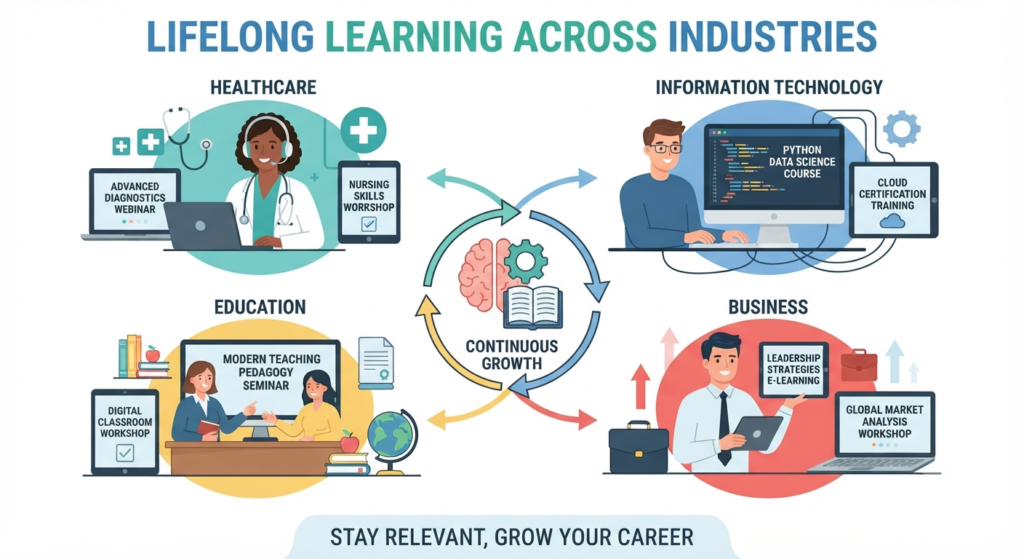
Lifelong Learning in Different Industries
Healthcare
Healthcare professionals regularly participate in lifelong learning programmes to stay updated with medical research, patient care practices, and healthcare regulations.
Information Technology
IT professionals continue learning about artificial intelligence, cloud computing, cybersecurity, software development, and emerging technologies to remain competitive.
Education
Teachers and educators participate in professional development programmes to improve teaching methods, classroom management, and student engagement.
Business
Managers, entrepreneurs, and business professionals use lifelong learning to strengthen leadership, financial management, marketing, communication, and strategic planning skills.
Challenges of Lifelong Learning
Although lifelong learning offers many benefits, some learners may face challenges.
- Limited time due to work and family responsibilities
- Course fees and training expenses
- Difficulty maintaining motivation
- Balancing learning with daily commitments
Fortunately, flexible online learning platforms have made education more accessible than ever before.
Tips for Success in a Lifelong Learning Programme
To make the most of your learning journey, consider these practical tips:
- Set clear learning goals.
- Choose courses that match your interests and career objectives.
- Create a regular study schedule.
- Practice your new skills consistently.
- Earn recognized certifications whenever possible.
- Stay curious and continue learning throughout life.
The Future of Lifelong Learning
The future of lifelong learning is becoming increasingly digital. Artificial intelligence, virtual classrooms, microlearning, and personalized learning platforms are transforming how people learn new skills.
Employers are placing greater value on practical skills and continuous learning. As industries continue to evolve, lifelong learning programmes will play an essential role in helping individuals remain competitive and adaptable.
Frequently Asked Questions (FAQs)
What is a lifelong learning programme?
A lifelong learning programme is a structured approach that encourages individuals to continue learning new skills and gaining knowledge throughout their lives.
Who can join a lifelong learning programme?
Anyone can participate, including students, professionals, entrepreneurs, job seekers, and retirees who want to improve their knowledge and skills.
Are online courses part of lifelong learning?
Yes. Online courses, professional certifications, workshops, and training programmes are all common forms of lifelong learning.
Why is lifelong learning important?
Lifelong learning helps individuals stay updated, improve career opportunities, develop new skills, increase confidence, and adapt to changing industries.
Conclusion
A lifelong learning programme is an investment in your future. Continuous learning helps individuals stay informed, develop valuable skills, and achieve both personal and professional success. Whether through online cours